Home

                     Join us for our 2 Upcoming Events!                                                          

May 23, Montreal    


Join Nick Saul and Andrea Curtis at the launch of The Stop: How the Fight for Good Food Transformed a Community and Inspired a Movement. Nick and Andrea will share stories from the book, talk about food politics and community-building and chronicle how The Stop’s innovative approach to food justice is inspiring a movement of Community Food Centres across the country.

Click on the poster for more information.


May 25-26, Toronto 


Be part of a strategic forum that will bring together food, farm, and fisheries leaders, innovators and entrepreneurs with social finance leaders, investors and collaborators to explore the opportunities and challenges in growing local, sustainable food systems.

Click on the poster for more information.


Quebec Government Adopts Food Sovereignty Policy

Last week the Pauline Marois government of Quebec released its long-awaited “food sovereignty” policy (available in French only) and, along with it, created an advisory committee which brings together key actors in the food system.

There is good news and bad news about this policy. Find out what they are.


Our 2012 Financial Statements are out! Have a Look


Bloggers Wanted

What do you get when you mix FSC with a not-for-profit progressive news outlet? You get a food matters column, that’s what! Read more about this opportunity.


Request for Proposals - Deadline Extended to May 24

Host Food Secure Canada's Next Assembly

Do you want to bring the food movement to your community and/or bring your community's issue to the national stage?

In November 2014, we will be hosting our 8th National Assembly and we are looking for a host organization and community to help make it happen.  We hold the assembly in a new community or region of Canada each time to make this exciting event accessible to different communities as well as to highlight regional food issues.

Find out more.


Food Secure Canada Stands in Solidarity with Idle No More

Food Secure Canada stands proudly in solidarity with our friends, relatives, neighbours and colleagues across this land known as Canada, and around the world, who are organizing and inspired by the Idle No More movement.

Outrageously high rates of hunger (as high as 70% for children in Nunavut to cite one example) and rampant diet-related chronic diseases amongst First Nations, Métis and Inuit peoples, as well as the destruction of traditional indigenous food systems are a deep concern to Food Secure Canada.


Continue reading the statement.


AttachmentSize
postersmall5.jpg121.28 KB

The Latest

Local - What's in a Word?

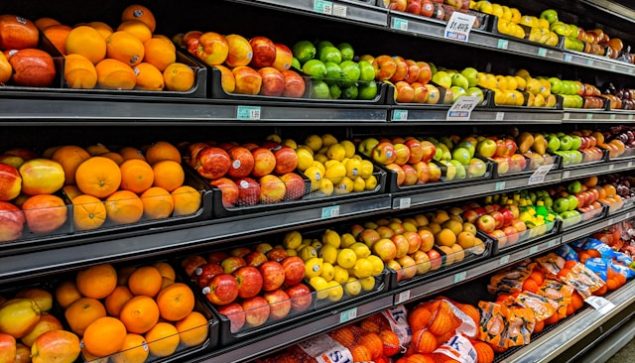
In March of this year Ontario Premier Kathleen Wynne re-introduced the Local Food Act, in which local is defined as the province of Ontario. This soon ran afoul of the Canadian Food Inspection Agency (CFIA) and the little known federal definition of local. A couple of small business owners in Ontario could have warned her of that. These same businesses were under threat of fines from the Canadian Food Inspection agency for labeling as  “local” food sourced from more than 50km away – this contravened the definition of local, enshrined in federal regulations since 1974.

Fast forward to May 10th and the CFIA announced that it will be modernizing its food labeling approach, including the definition of local, “with input from consumers, industry and other stakeholders”.  While most would agree that 50km is overly restrictive, there are serious challenges to codifying a term such as “local” for a country as large as Canada.

Twenty years ago, “putting a farmer’s face” on foodstuffs was an innovative way to re-humanize and shorten the food supply chain for a generation of North Americans bereft of any direct link to a farm. More recently, we came to know the faces of some of the fishers who supply our seafood. The term local has now become synonymous - in many people’s minds, if not in federal legislation - with short supply chains, sustainable production and fresh healthy food.

That many of us are considering the provenance of our food is a great thing.  It has been a short step to including in our considerations how the crop was grown, the livestock raised, the seafood harvested, the impact on the environment across the lifecycle of the foodstuff, and the conditions of those who handled that food, be they workers in a field, an abattoir or a grocery outlet. And many have understood that giving preference to local producers and suppliers has multiple benefits that also stay local: economic, social, cultural, and environmental. 

When we think local and are embedded in a place, we are more inclined to assume and share the responsibilities that come with supporting vibrant communities and ecosystems. Sustainable and just food economies are built on respectful relationships, between people, and with the land and water that sustain us all. They foster food sovereignty, where questions of justice and control are integrated into the methods of production and the means of access. 

However, distance is often necessary, even for small and ecological producers in 21st century Canada, no less than for many remote communities to sustain themselves.  In British Columbia’s Similkameen valley, organic orchards thrive in that particular combination of heat units, soil conditions and water availability.  Fruit from the sparsely populated valley is shipped across British Columbia and the country. In Nova Scotia, sustainable seafood quickly saturates the local market and must seek distant options out of province in order to maintain the livelihoods of the fishers.  In Whitehorse wheat must generally travel from out of the Territory for those wishing their daily bread.

The recent media and political focus on the definition of local have helped to launch an important dialogue. However, we must not loose sight of the fact that, however it is defined in law, no matter what the geographical radius or political boundary chosen, it will not capture all the other values and characteristics that we know are necessary for just and sustainable food systems.

Join Food Secure Canada in this conversation about the definition of local. Over the coming months, many of us will be talking about the best way forward on this issue in order to develop our submission to the Canadian Food Inspection Agency’s food labeling consultation.

If you would like to comment on this article, you can do so below. For more information, contact abra@foodsecurecanada.org and/or join the Local and Sustainable Food Systems Network.